What an AI-Powered Agency Really Looks Like
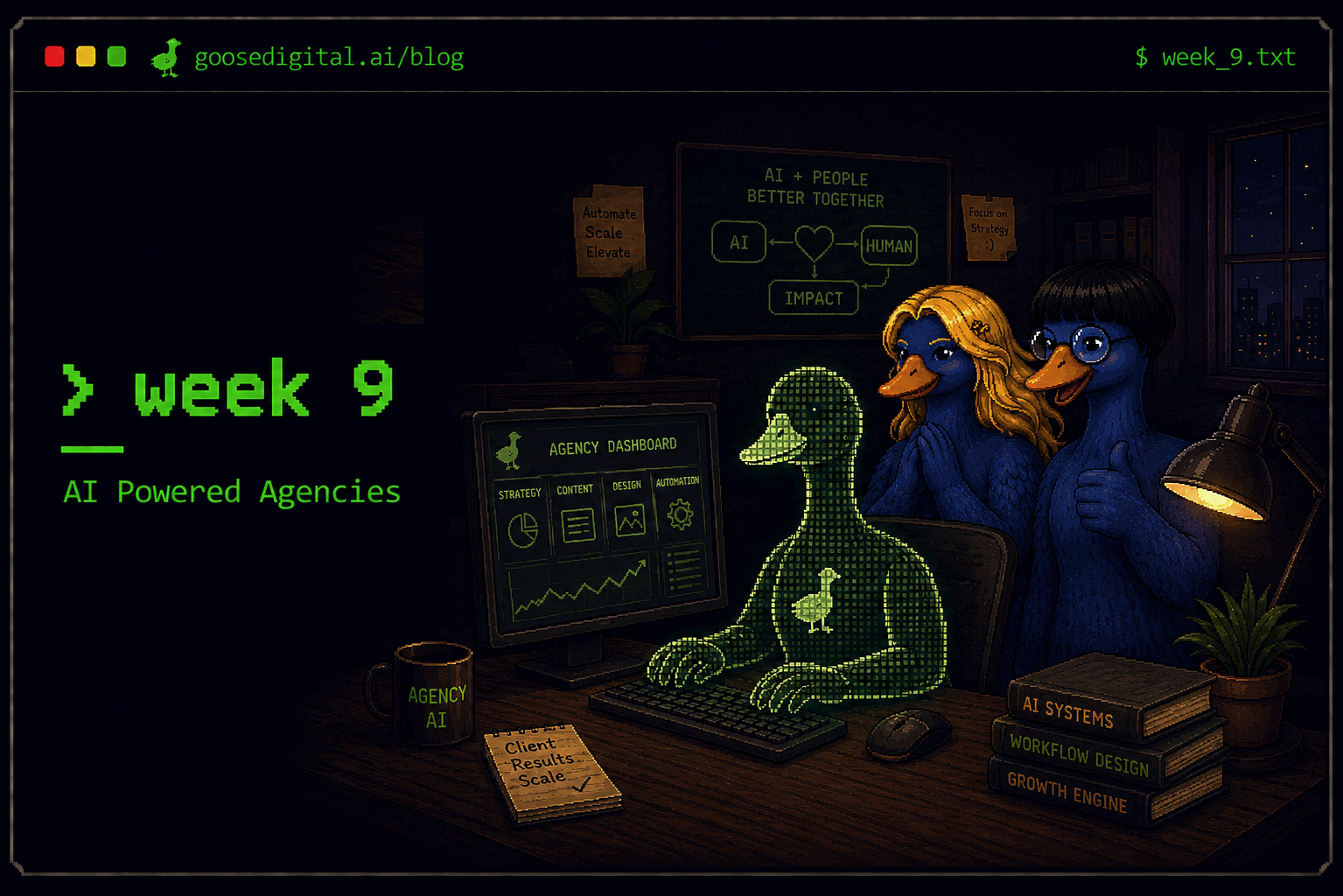
The sewing machine didn’t replace the fashion designer
When the sewing machine was invented, you could fire the hand sewers. The labour that had been slow, repetitive, and specialised to a single motion became automated overnight. But nobody fired the fashion designer. Because the sewing machine doesn’t decide what gets made, what it should look like, or why anyone would want to wear it.
That’s the frame we keep coming back to when we think about where agency work is going.
You can fire coders when Claude can write code. But the person who decides what the project is, why it needs to exist, and what it should do for the person using it — that role doesn’t go anywhere. A movie director can replace CGI artists with AI. But somebody still has to direct the movie. Somebody still has to decide there’s a story worth telling, what the fictional world looks like, and why any of it should make an audience feel something.
The pattern is the same everywhere. The tool gets automated. The direction doesn’t.
What actually gets replaced
The roles that are most exposed are the ones where a skilled person plugs away at a tool. Not because those people aren’t talented — often they’re very good at what they do. But when the value is in the execution of a known process, and AI can execute that process faster and cheaper, the economics shift.
In agency work, that means a lot of the manual production layer. Repetitive design tasks, templated copy, code that follows a clear spec, asset resizing, format conversions. The laborious, non-creative middle of projects that currently takes time because it takes hands.
What doesn’t get replaced is the layer above it. The person who decides the campaign needs to exist. The person who understands why this brand sounds different from that one. The person who knows what user flow should feel like, what the experience is trying to do, and whether the output actually achieves it. The person who can look at something AI generated and know immediately whether it’s right — not because they checked a list, but because they understand the why behind the project deeply enough to feel when something is off.
That’s not a fixed skillset or tool knowledge. It’s creativity, artistic direction, the ability to orchestrate, and a real understanding of how the pieces connect. Content creators can produce AI slop, or they can spend real time directing something specific and human that takes genuine thought to get right. The second one will always perform better. That gap doesn’t close just because the generation gets faster.
Security, oversight, and the human in the loop
There’s another layer that doesn’t get talked about enough. AI systems have gaps. Jailbreak prompts exist. Models can be steered in directions nobody intended if nobody is watching. As more of agency work gets automated, the people at the backend of those systems — the ones who can shut something down, catch something before it goes out, or flag that a generation has gone somewhere it shouldn’t — become more important, not less.
That’s not a creative role. It’s a governance role. And it matters more as the automation layer gets deeper.
Human connection is also still part of the picture right now. Clients want to talk to people. Trust gets built through relationships. That dynamic is real and it’s not disappearing immediately — partly because the people currently running most companies grew up in a world where that was just how business worked, and that shapes what feels right to them.
What changes as the generation shifts
But that will look different as the people who grew up with this technology move into the roles where those decisions get made. There’s no prior model pulling them toward a particular way of doing things. No sense that a meeting needs to happen a certain way because that’s how meetings have always worked. The younger generation didn’t have a ‘before’. That changes what feels normal, what feels necessary, and what feels like it can be done differently.
We’re not at that inflection point yet. But the direction is clear enough that the question for anyone building skills right now isn’t “how do I get better at this tool.” It’s “do I understand the why behind the work well enough that I’m the one directing the tool, not the one being replaced by it.”
That’s the shift. And it’s already happening.